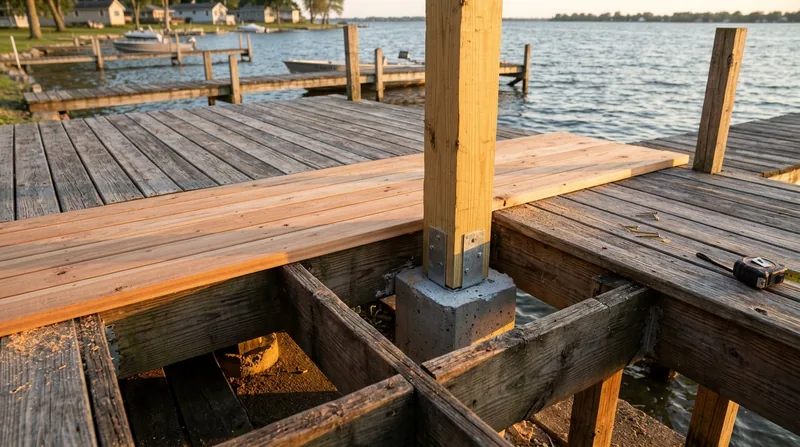




Deck & Porch Repair in Toledo is a year-round need in a city where freeze-thaw cycles, lake-driven humidity, and heavy snow loads work against exposed wood. Toledo's signature architecture, the wraparound porches of Victorian mansions in the Old West End, the deep front porches of Westmoreland's 1920s Colonials, and the simple frame porches of East Toledo cottages, all sit in an environment that keeps wood wet and under stress. Lake Erie air stays damp through the winter; ice dams push water into fascia and soffits; freeze-thaw cracks open joints; and the poor drainage of the old Great Black Swamp means ground-level wood stays vulnerable. We replace rotted boards, posts, and railings, repair structural framing under sagging decks, and fix stairs and balusters, working with repair first and honest about when replacement is the right call.
Why Deck and Porch Repair Matters in Toledo's Wet Climate
Decks and porches in Toledo take a unique beating. The flat terrain and clay soils of the old swamp keep moisture high year-round, while Lake Erie's proximity brings salt-laden air and extended freeze-thaw cycles. Snow loads compress decks in winter; spring melt pools on poorly pitched surfaces; and the constant humidity means wood never fully dries. Posts rot from the bottom up where they meet wet ground or sit on concrete piers without proper drainage. Ledger boards, where decks attach to the house, separate from rim joists as fasteners corrode and wood shrinks. Stairs and railings crack and shift as the substructure moves.
- Rotted posts and beams lose load capacity and can settle unevenly, tilting the entire structure.
- Wet ledger boards allow water to migrate into rim joists and band boards, spreading rot into the house frame.
- Cracked or missing baluster balusters and loose railings become safety hazards and fail inspection.
- Sagging deck surfaces indicate substructure failure and need structural assessment before anyone uses the space.
- Rotted stair stringers and treads are liability risks and must be addressed before the next season.
Catching these issues early and repairing sound wood prevents expensive replacement and keeps outdoor spaces safe for family and guests.
Key info: Toledo sits at the mouth of the Maumee River on Lake Erie, with humidity that rarely drops below 60 percent and freeze-thaw cycles that can crack wood and corrode fasteners in a single winter. A deck inspection every two to three years catches rot before it reaches the frame of the house. For guidance on when repairs require a permit, contact the City of Toledo Building and Zoning Department or your township office.
How We Repair Decks and Porches: Step by Step
Our approach starts with a careful inspection to map the extent of rot, structural compromise, and safety issues. We photograph the damage, identify which wood can be repaired and which must be replaced, and explain the cost and timeline upfront. Repair always comes first when the structure and fastening are sound. We remove only the damaged portions, sister new lumber to existing beams where possible, or replace boards and posts in kind. Stairs and railings are rebuilt to code and secured with stainless fasteners that resist lake-air corrosion. We work through the seasons, timing the work to avoid the worst of the winter weather while staying responsive to safety emergencies.
- Inspect the entire structure, probe suspect wood with a screwdriver, and photograph all damage.
- Assess which wood can be repaired by sistering new lumber or replacing individual boards versus full structural replacement.
- Obtain any required permits from your local building department if the work affects stairs, railings, or the ledger board attachment.
- Remove rotted members, install new pressure-treated or decay-resistant wood, and secure all fasteners with stainless hardware.
- Test stairs and railings for stability, ensure proper pitch for water drainage, and inspect the ledger seal.
- Walk through the finished work with you and explain maintenance steps to extend the life of the repair.
Every repair is built to be solid and to last through Toledo's tough seasons.
Local example: A 1920s Colonial Revival home in Westmoreland had a deep front porch with two rotted posts and a ledger board pulling away from the rim joist. We sistered new posts alongside the old ones, reattached the ledger with stainless lag bolts, and sealed the joint with flexible caulk. The porch stayed, the house frame stayed dry, and the homeowner avoided a $15,000 replacement. Work like this is why we start with repair, not demolition.
Repair Methods for Toledo Decks and Porches
| Approach | Description | Best for |
|---|---|---|
| Sistering | New lumber bolted alongside existing beams or posts to share the load and reinforce the structure. | Posts and beams with sound wood outside the rot zone; preserves the existing frame and avoids full replacement. |
| Board and plank replacement | Removing rotted deck boards, stringers, or ledger boards and installing new pressure-treated or naturally decay-resistant lumber in the same location. | Surface rot on decking, stairs, and railings where the underlying structure is sound; fastest and most cost-effective for localized damage. |
| Ledger board repair and reattachment | Removing the old ledger, replacing rotted wood, and reattaching with stainless bolts through the rim joist with a moisture barrier underneath. | Decks pulling away from the house or showing rot at the connection; prevents water from entering the rim joist and band board. |
| Full structural replacement | Demolishing and rebuilding the entire deck or porch frame when rot is extensive, fasteners are corroded beyond reuse, or the structure has settled unevenly. | Decks older than 20 years with widespread rot, missing or corroded ledger bolts, or sagging that cannot be corrected by repair alone. |
| Stair and railing repair | Replacing rotted stringers, treads, balusters, and newel posts; rebuilding to current code with stainless fasteners and proper railings. | Stairs that move or creak, loose balusters, or missing railings; ensures safety and passes inspection. |
We choose the right method based on the extent of damage, the age of the structure, and whether your local building department requires a permit. A free estimate includes a clear recommendation and a realistic cost range for each option.
Deck & Porch Repair Cost in Toledo: What to Expect
Pricing for deck and porch repair in Toledo depends on the extent of rot, the structural method required, and whether the work triggers a permit. A simple board replacement on a small section might start around $900 to $1,500. A ledger board repair with sistering and reattachment typically runs $1,500 to $3,000. Full structural replacement of a medium deck (12 x 14 feet) can range from $4,000 to $8,000 or more. Large porches on historic homes or jobs requiring multiple structural interventions are estimated on site because every house and every damage pattern is different.
Several factors move the cost up or down. The size of the affected area, the type of wood (pressure-treated lumber costs less than naturally decay-resistant species like redwood or cedar), access to the structure, whether the work requires a permit and engineering drawings, and the urgency of the repair all matter. If the ledger board is pulling away and water is entering the rim joist, the job becomes more complex and expensive because the interior frame may need attention. Stairs and railings that need complete replacement cost more than a single rotted post.
We always recommend getting two or three estimates from contractors in your area. A low bid that skips proper fastening or drainage details will fail in Toledo's climate. A high bid should be explained in detail: if it includes sistering versus replacement, engineering, or permit coordination, those add value. Our estimate is free, includes a site inspection and photographs, and covers the cost of the repair method we recommend. Visit our pricing page for more detail on typical jobs and what drives the cost.
Deck & Porch Repair Near Me: What Toledo Homeowners Should Know When Hiring a Contractor
Finding a reliable carpenter for deck and porch work in Toledo means checking a few key points. First, confirm that the contractor is fully insured and can provide a certificate of insurance on request. Ask for references from recent jobs in your neighborhood; a contractor who has worked on Westmoreland Colonials or Old West End Victorians understands the specific challenges of Toledo's older stock. Second, get the estimate in writing and ask for a clear breakdown of labor, materials, and any permit or engineering costs. Third, if your work is on a historic home or in a protected district, ask whether the contractor has experience navigating local review boards or historic preservation guidelines. Fourth, understand that repairs to stairs, railings, ledger boards, and certain structural changes commonly require a permit from your local building department; a good contractor will explain this upfront and help you coordinate the application.
- Verify that the contractor has completed similar work in Toledo and can provide references from homeowners you can contact.
- Ask for a written estimate that breaks down materials, labor, and any permits or engineering fees separately.
- Confirm that the contractor will pull permits if required and coordinate inspections with your local building department.
- Check whether the work falls under HOA rules or historic district guidelines and ask how the contractor handles those approvals.
- Request a timeline and clarify what happens if weather delays the job or if hidden rot is discovered during the work.
A contractor who explains the repair method, answers your questions honestly, and doesn't rush you into replacement when repair is possible is worth the conversation. Call us at (419) 574-6306 for a free estimate, or use our contact page to request a time that works for you. We'll inspect the damage, explain what we find, and give you a clear path forward.
Deck & Porch Repair in Toledo: Pricing Guide
| Service | Price | Details |
|---|---|---|
| Board and plank replacement | Starting at $900 | Includes removal of rotted decking, stringers, or railing boards and installation of new pressure-treated lumber, fasteners, and finish. |
| Post and beam repair or sistering | Starting at $1,500 | Includes inspection, new lumber installation alongside existing members, bolting, and stainless fasteners; cost rises with beam depth and load requirements. |
| Ledger board repair and reattachment | Starting at $1,500 | Includes removal of old ledger, replacement of rotted wood, reattachment with stainless bolts, and moisture barrier installation to prevent rim joist damage. |
| Stair and railing repair or replacement | Starting at $2,000 | Includes replacement of stringers, treads, balusters, and newel posts; rebuilding to code with stainless fasteners and proper railings for safety and inspection. |
| Full deck or porch structural replacement | On estimate | Extensive rot, settlement, or age-related failure requires on-site assessment; 12 x 14 foot decks typically range $4,000 to $8,000 depending on materials and access. |
| Free estimate and site inspection | No charge | Includes photographs, damage assessment, repair method recommendation, and written cost breakdown; response within 24 hours at (419) 574-6306. |
Indicative pricing, the exact cost depends on square footage, finish, and site access. Free personalized estimate within 24h at (419) 574-6306.


