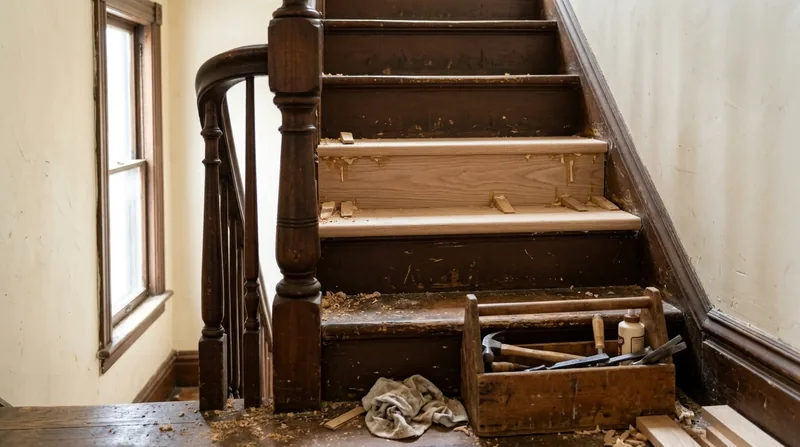




Toledo's Victorian mansions, Tudors and worker cottages climb steep stairs every single day. Whether it's a grand wraparound-porch entrance in the Old West End, a narrow basement staircase in Birmingham, or a rickety attic ladder in a 1920s bungalow across West Toledo, stairs and railings take real punishment from freeze-thaw cycles, humidity off Lake Erie, and decades of foot traffic. Stair and railing repair in Toledo isn't cosmetic work, it's structural. Squeaky treads signal loose fasteners or shifting stringers. Wobbly balusters mean a safety hazard. Rotted treads or stringers, common in damp basements and on exposed porches, need replacement or reinforcement. We repair and rebuild the steep staircases that hold up your home, restore period railings to their original character, and install sturdy handrails wherever safety demands them. If your stairs creak, sag, or feel unsafe underfoot, call us at (419) 574-6306 for a free estimate.
Why Stair and Railing Repair Matters in Toledo's Historic Homes
Toledo sits on the flat, poorly drained clay of the old Great Black Swamp, and that means damp basements, a high water table, and long freeze-thaw winters that stress wood connections. Lake Erie keeps the air humid year-round, and winter ice dams push water into fascia, soffits, and window sills, but they also soak porch framing and basement stairs. The city's collection of late-Victorian mansions, 1920s Tudors, and frame cottages all feature wood stairs as primary vertical circulation, and many have been through a century or more of seasonal movement. Stringers warp. Treads split and cup. Balusters loosen. Newel posts shift. A loose railing isn't just annoying, it's a liability. A sagging or rotted stringer can collapse under weight. Squeaking treads often signal fasteners working loose, but they can also mark the early stage of wood rot in the tread or stringer itself, especially in basements and on covered porches where moisture lingers.
- We inspect treads, stringers, balusters, newel posts, and handrails for loose fasteners, wood rot, and structural movement.
- We tighten or replace fasteners, reinforce treads with blocking or sistering, and rebuild rotted sections rather than replace whole stairs when the wood justifies repair.
- We restore period railings to match original detail and install modern handrails and balusters where code or safety requires them.
- We build and install basement stairs, attic ladders, and exterior porch stairs in durable framing that handles Toledo's moisture and freeze-thaw stress.
Addressing stair and railing problems early prevents injury, stops rot from spreading, and preserves the architectural character that defines Toledo's neighborhoods.
Key info: Many stair repairs, especially those involving structural changes or alterations to load-bearing elements, require a building permit in Toledo. Check with the City of Toledo Building Department before major work begins. We help you understand permit requirements and coordinate with inspectors.
How We Repair and Rebuild Stairs in Toledo: Our Process
Every stair and railing job starts with a thorough walk-through. We climb every step, test every baluster, check the newel post for movement, and inspect the stringers for rot, warping, and fastener failure. We photograph problem areas, measure dimensions, and identify whether the issue is loose hardware, wood rot, structural settlement, or a combination. Toledo's old homes often show all three at once, especially in basements where the sill plate and rim joist have absorbed decades of dampness. Once we know what we're dealing with, we propose repair first, replacement only when honest assessment says the wood won't hold. A loose tread often just needs new fasteners. A rotted tread can be sister-joisted or replaced in place. A warped stringer may need blocking or reinforcement rather than removal. For period homes in the Old West End or Westmoreland, we match original details, wood species, and finish so the repair disappears into the original work.
- We remove and reset loose balusters, tighten newel posts, and replace rotted or split treads without disturbing the overall stair structure.
- We sister new stringers alongside rotted ones, transferring load and preserving the stair's geometry and appearance.
- We install new handrails, balusters, and railings in wood species and profiles that match your home's era and style.
- We build basement stairs, attic ladders, and exterior porch stairs from pressure-treated or rot-resistant framing that handles Toledo's freeze-thaw and moisture.
- We sand, stain, and finish all new wood to blend with existing treads and railings, or restore original finishes where appropriate.
The result is a safe, structurally sound staircase that looks like it was never broken at all.
Example: A Victorian home in Toledo's Old West End had a grand entry staircase with hand-turned balusters and a mahogany handrail. Three balusters were loose, the newel post had shifted, and two treads were cupped from humidity. We tightened all fasteners, reset the newel, and sister-joisted the cupped treads from underneath without disturbing the finish. The stairs are now safe and look original. That same approach works for a simple frame cottage in Birmingham or a 1920s bungalow in Library Village.
Stair and Railing Repair Methods: When to Repair vs. Replace
| Repair Method | What It Does | Best For |
|---|---|---|
| Fastener Reset and Tightening | Remove and re-set loose screws, bolts, and lag bolts; replace stripped fasteners with new hardware; add blocking or shims to eliminate movement at joints. | Squeaky or wobbly treads and balusters, loose newel posts, minor seasonal movement in old homes. |
| Tread Reinforcement and Sistering | Install new blocking or sister boards underneath a cupped, cracked, or soft tread to restore stiffness and transfer load without removing the original. | Cupped or slightly rotted treads, sagging treads in old stairs, moisture-damaged treads in basements and porches. |
| Stringer Repair and Reinforcement | Sister a new or reinforced stringer alongside a warped or rotted one; splice and reinforce localized rot; add cross-bracing to stiffen a weak stair. | Rotted stringers in damp basements, warped stringers from freeze-thaw, sagging stairs, stairs that flex underfoot. |
| Tread and Riser Replacement | Remove and replace individual treads and risers in kind or with new wood; match original species, thickness, and finish for period homes. | Severely rotted, split, or worn treads; cosmetic restoration of period stairs; upgrading old risers to code-compliant closed steps. |
| Baluster and Railing Restoration | Remove, repair, or replace individual balusters; restore handrails to original profile; install new railings that match architectural style or meet current code. | Loose or rotted balusters, period railings requiring restoration, safety upgrades, split or damaged handrails. |
| Basement and Exterior Stair Installation | Build and install new basement stairs, attic ladders, or exterior porch stairs in pressure-treated lumber or rot-resistant species; secure to rim joist or foundation. | New basement access, replacing unsafe or missing stairs, exterior porch stairs that handle freeze-thaw, attic ladders. |
The goal is always to repair when the wood is sound enough to justify it, and to match original detail and character in historic homes. Replacement happens only when rot, damage, or code requirements demand it.
Stair and Railing Repair Cost in Toledo: What to Expect
Stair and railing repair costs in Toledo start at around $600 for simple jobs like tightening balusters, resetting fasteners, and fixing a squeaky tread. A more involved repair, such as reinforcing a sagging tread with blocking or replacing one or two rotted treads, typically runs $1,200 to $2,500. Sistering a stringer or rebuilding a section of railing usually falls in the $2,000 to $4,000 range. A complete stair rebuild, including new stringers, treads, risers, and railings, can exceed $5,000 depending on the stair's size, wood species, and architectural detail. Factors that move the cost up include the extent of wood rot (which requires more material and labor), the accessibility of the stair (basement stairs in tight spaces cost more), the need to match original wood species and finish (period restoration in Old West End homes), and whether the job requires a building permit and inspection.
The best way to know your actual cost is to get a free estimate from us. Call (419) 574-6306 and describe your stair issue, or request a visit so we can see the problem firsthand. We respond within 24 hours, measure what needs repair, and give you a clear price for the work. Visit our pricing page for more detail on how we quote different repair types.
Don't delay on stair repairs. A loose or rotted stair is a safety hazard and can worsen quickly in Toledo's damp climate. The sooner you address it, the less likely rot will spread to the stringers or rim joist below.
Stair and Railing Repair Near Me: What Toledo Homeowners Should Know When Hiring a Contractor
Hiring the right carpenter for stair and railing repair means finding someone who understands both the structural demands of your staircase and the architectural character of your home. Toledo's neighborhoods, from the Victorian mansions in the Old West End to the Tudors of Westmoreland to the bungalows of West Toledo and Sylvania, each have their own styles and challenges. A contractor who knows Toledo's climate, wood species, and building history will repair your stairs right the first time and preserve their original look. Here's what to look for.
First, confirm that your contractor is fully insured and carries liability coverage for carpentry work. Ask for a current certificate of insurance and verify it covers the scope of your repair. Second, get at least two or three estimates from different contractors. Compare what each one proposes to repair vs. replace, and ask why they recommend their approach. A contractor who wants to replace your entire staircase when reinforcing the stringers would work is a red flag. Third, ask for references from recent stair and railing work in Toledo or nearby areas, and follow up with those homeowners. Fourth, understand that some stair repairs require a building permit, especially if you are altering the stair's geometry, changing the rise or run of steps, or modifying railings for code compliance. Ask your contractor to clarify whether your job needs a permit and to coordinate with the City of Toledo Building Department if it does. Fifth, if you live in a historic district like the Old West End or in a community with an HOA, check whether there are restrictions on materials, finishes, or railings before work begins. Finally, ask your contractor to explain their process in plain language, walk you through the repair, and show you how the finished staircase will look and function. Contact us for a free estimate and honest advice on your stair and railing repair.
Stair & Railing Repair in Toledo: Pricing Guide
| Service | Price | Details |
|---|---|---|
| Tread and fastener tightening | Starting at $600 | Squeaky treads, loose balusters, reset fasteners and newel posts, no structural damage |
| Tread reinforcement and blocking | Starting at $1,200 | Sister-joist cupped or slightly soft treads, add blocking underneath, moisture-damaged treads in basements |
| Stringer repair or sistering | Starting at $2,000 | Reinforce or sister rotted or warped stringers, repair localized rot, address sagging or flexing stairs |
| Tread replacement and railing restoration | Starting at $2,500 | Remove and replace rotted treads, repair or restore balusters and handrails, match original wood species and finish |
| Full stair rebuild or new installation | On estimate | Complete stringers, treads, risers, railings, basement stairs, attic ladders; size, species, and architectural detail drive final price |
| Estimate and travel | Free | Response within 24 hours, included in Toledo and surrounding areas, no obligation to book |
Indicative pricing, the exact cost depends on square footage, finish, and site access. Free personalized estimate within 24h at (419) 574-6306.


