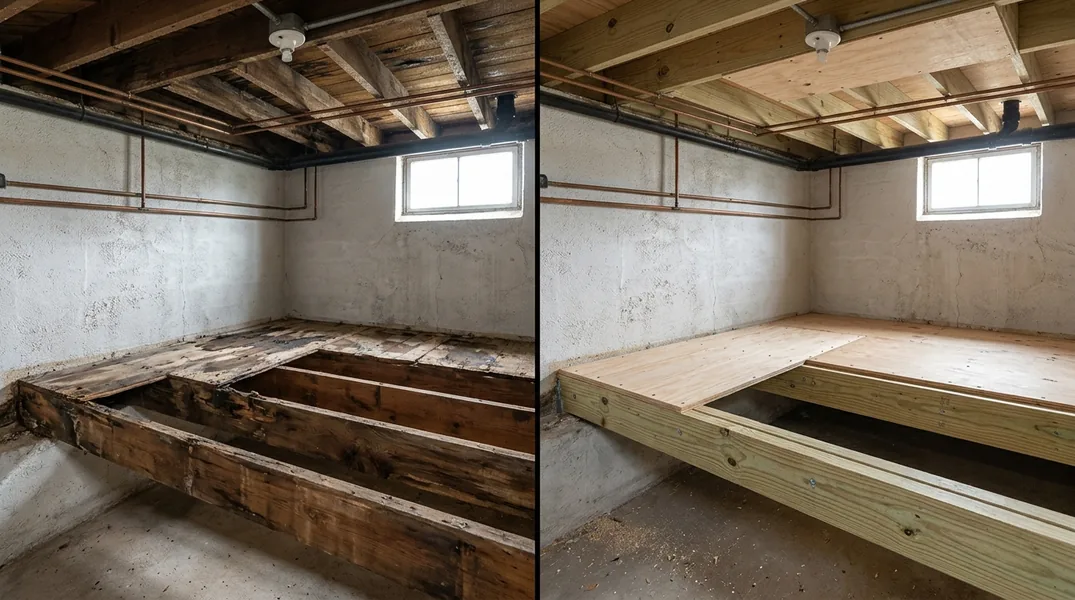
Why Is My Floor Sagging? Common Causes in Older Toledo Homes
If you've noticed your hardwood floors sloping toward the center of a room or your feet rolling slightly when you walk across your living room, you're experiencing a sagging floor. This is one of the most common structural complaints we hear from homeowners in Toledo and the surrounding areas, and for good reason. The foundation of your home literally supports everything above it, and when floors begin to sag, it's your home's way of sending a distress signal.
The primary culprit behind sagging floors is damage to the structural support system beneath your home. Floor joists, the horizontal beams that run perpendicular to your floorboards and carry the weight of everything above them, can weaken over time due to several factors. Wood Rot & Dry Rot Repair is often the underlying issue, especially in older homes where moisture infiltration has gone unchecked for years. When wood rots, it loses its structural integrity, becoming soft and crumbly, unable to support the loads it once carried. In humid climates like Ohio's, this is a particularly pressing concern.
Beyond wood rot, Termite Damage Repair is another significant cause of floor sag. Termites tunnel through wood, creating hollow passages that compromise structural strength. Even if you don't see visible termite activity, past infestations can leave lasting damage. Additionally, inadequate support from failing foundation posts, settling foundations, or the natural shrinkage of old-growth lumber over decades can all contribute to that unsettling slope underfoot.
Understanding Floor Joist Repair and Sistering Floor Joists
When your floor joists have been compromised, there are several repair approaches available, and the best solution depends on the extent of the damage and the underlying cause. Floor Joist & Subfloor Repair is a specialty that requires both structural knowledge and carpentry skill to execute properly. The most common repair method for partially damaged joists is called sistering, a technique where a new or reclaimed beam of the same dimensions is fastened alongside the damaged joist to share the load.
Sistering floor joists is an elegant solution when the damage is localized to a section of the joist rather than affecting the entire beam. The new sister joist is typically bolted or nailed to the existing joist with staggered fasteners, creating a combined structural unit that's often stronger than the original. This approach works well for joists with moderate rot or insect damage, allowing you to preserve the existing framing while restoring load-bearing capacity. However, if the damage is extensive or affects multiple joists in a line, a full joist replacement may be necessary.
The repair process begins with a thorough inspection to determine which joists are compromised and by how much. Professional contractors in Toledo will assess whether partial repairs, sistering, or full replacement is most appropriate. In some cases, temporary support beams must be installed during the repair to ensure the floor above doesn't collapse, adding complexity and cost but ensuring safety throughout the project.
Sagging Floor Repair Cost in Toledo: What to Budget
The pricing for sagging floor repair varies dramatically based on several factors, and it's crucial to understand what drives these costs. A minor repair affecting just one or two floor joists might run between $1,500 and $3,500, while more extensive damage requiring multiple sistered joists or complete joist replacement can easily exceed $8,000 to $15,000 or more. The total investment depends on the square footage affected, the severity of the damage, the accessibility of the space, and whether additional structural work like Beam Replacement & Load-Bearing Wall Removal is needed.
Labor costs typically constitute 60 to 70 percent of the total expense, while materials make up the remainder. If the underlying cause is wood rot or termite damage, you may also need to address moisture issues or pest treatment, which adds to the overall project cost. Some homeowners are surprised to learn that temporary support structures, which are essential for safety during repairs, represent a significant line item. Additionally, if your home's crawl space or basement is difficult to access, or if the damage extends across a large area, costs will climb accordingly.
The good news is that investing in professional repair now prevents far more expensive problems down the road. Ignoring a sagging floor can lead to structural failure, foundation damage, and exponentially higher repair bills. We recommend getting a free estimate from a qualified contractor who can evaluate your specific situation. Call Toledo Carpentry at (419) 574-6306 to schedule an inspection and receive a detailed assessment of repair needs and costs.
Signs Your Home Needs Floor Joist Repair
Recognizing the early warning signs of floor joist problems can save you thousands in repair costs and prevent safety hazards. Beyond the obvious sloping or uneven floors, there are several subtle indicators that your floor structure may be compromised. Creaking or bouncing floors when you walk across them suggest that joists are losing their rigidity and ability to distribute weight evenly. Doors and windows that stick or won't close properly can indicate that the house frame has shifted due to foundation settling or joist failure. Visible cracks in drywall or plaster, particularly in diagonal patterns, often correlate with structural movement caused by failing floor support.
Moisture is another red flag worth investigating. If you notice musty odors in your basement or crawl space, visible water stains on joists, or areas where the wood feels soft or spongy, wood rot is likely present. In Sylvania and other older neighborhoods around Toledo, homes built in the early to mid-20th century are particularly vulnerable to these issues. The longer moisture problems persist, the more extensive the structural damage becomes. If you spot any of these warning signs, it's wise to have a professional inspect your home's structural system before the problem worsens.
The Repair Process: What to Expect
Understanding what's involved in a floor joist repair project helps homeowners prepare for the work ahead. The process typically begins with a detailed inspection of the affected area and any adjacent joists that may be at risk. The contractor will identify the extent of damage, determine the cause (rot, termites, settling, etc.), and develop a repair plan tailored to your home's specific needs. If the underlying issue is moisture or pest-related, addressing that root cause is essential to prevent the problem from recurring.
Once the plan is in place, temporary support structures are installed to safely bear the load of the floor above while work proceeds. The damaged sections are then carefully removed or reinforced, depending on the repair method chosen. New lumber or sister joists are installed and secured according to building codes, and any additional structural components like support posts or beams are added as needed. The entire process requires precision and adherence to local building standards, which is why hiring experienced professionals is non-negotiable. After repairs are complete, the temporary supports are removed, and your floor should return to its original level and stability.
The timeline for these projects typically ranges from a few days for minor repairs to several weeks for extensive work. Homeowners should expect some disruption and noise during the repair period, and temporary access restrictions to certain areas of the home. Communication with your contractor throughout the project ensures you understand progress and any unexpected issues that arise.
Floor Joist & Subfloor Repair Near Me: When to Call a Professional
While some homeowners are tempted to tackle structural repairs themselves, floor joist work is genuinely a job for licensed professionals. The structural integrity of your home is not an area where DIY shortcuts are advisable. Improper repairs can create safety hazards, fail to address underlying causes, and potentially violate local building codes, which could complicate insurance claims or future home sales. Professional contractors have the knowledge, tools, and experience to diagnose problems accurately and implement solutions that will last for decades.
When you're ready to address your sagging floor, reach out to Toledo Carpentry for a comprehensive evaluation. We serve homeowners throughout the Toledo area, including Maumee, Perrysburg, and surrounding communities. Our team specializes in structural repairs and has successfully restored the integrity of countless older homes. Contact us at (419) 574-6306 or visit our website to request a free estimate and get answers to your specific questions about your home's sagging floors.
Looking for a professional carpentry contractor in Toledo? Toledo Carpentry responds fast for all your carpentry needs.
Get a Free QuoteOur services: Wood Rot & Dry Rot Repair · Termite Damage Repair · Floor Joist & Subfloor Repair